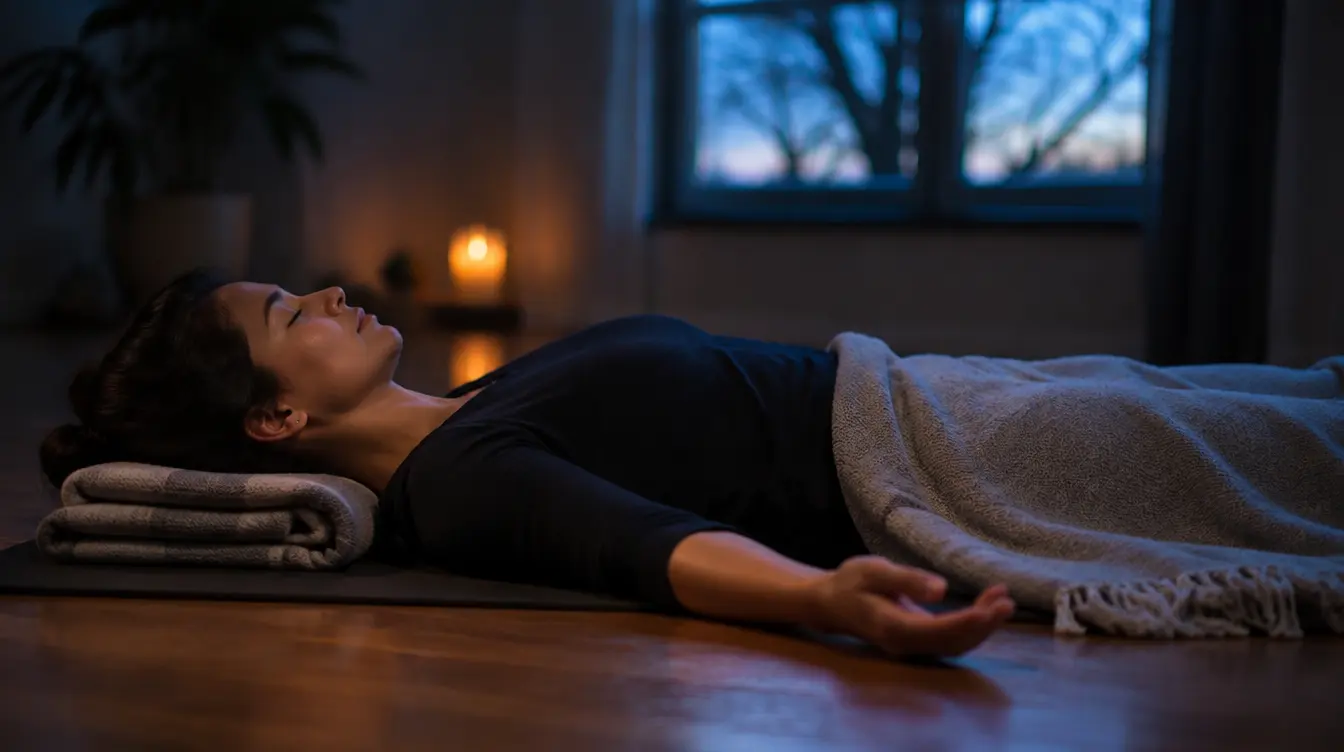
Yoga Nidra (often called "yogic sleep") is a guided meditation you do lying down. A voice leads your attention through the body, the breath and a few simple images, while you stay still and let go. There's no stretching and no poses. It's "yoga" in the older sense of the word: a practice of awareness.
At night, that makes it a natural bridge into sleep. Instead of lying in the dark arguing with your thoughts, you give your mind something slow and gentle to follow until it stops needing to.
Start Here: Free Yoga Nidra for Sleep
Get into bed, put on headphones and press play. If you fall asleep partway through, that's fine. At bedtime, that's the point.

Yoga Nidra for Deep Sleep & Anxiety Relief (26 minutes). Short on time? Try the 9-minute version below.

What Happens in a Yoga Nidra Session
Teachers vary, but most Yoga Nidra practices follow the same gentle steps:
- Settling. You lie on your back, get comfortable and take a few slow breaths.
- Intention (sankalpa). A short, positive phrase you repeat silently, like "I rest easily" or "I am at peace".
- Body rotation. Your attention is guided quickly around the body, one small part at a time: right thumb, index finger, middle finger… This is the heart of the practice. It keeps the mind gently busy so it can't wander off into worry.
- Breath awareness. Noticing, or counting, slow breaths.
- Sensations and images. Feeling heaviness and lightness, warmth and coolness, or picturing calm scenes like a sky, a forest or the ocean.
- Returning, or sleeping. In the daytime you come back slowly. At night, many recordings simply let you drift off.
Why Yoga Nidra Helps at Bedtime
- It gives a busy mind a job. Following the voice from one body part to the next leaves little room for replaying the day.
- You don't have to "try" to relax. You just follow instructions. Effort is the enemy of sleep, and Yoga Nidra takes effort away.
- It slows everything down. Slow breathing and a still body tell your nervous system it's safe to rest.
- It becomes a cue. Do it most nights and your body starts to link that voice with sleep.
Yoga Nidra is a relaxation practice, not a treatment for sleep disorders. If you've had trouble sleeping most nights for several weeks, please talk to your doctor. Practices like this can sit alongside proper care.
A 5-Minute Yoga Nidra You Can Do Without a Recording
Lying in bed with your eyes closed, go slowly through each step:
- Take three breaths, letting each out-breath be longer than the in-breath.
- Say your intention silently three times: "I let the day go."
- Move your attention, without moving your body, to each place in turn, spending a breath on each: right hand thumb, first finger, second, third, little finger, palm, back of the hand, wrist, forearm, elbow, upper arm, shoulder. Then the left side the same way.
- Right foot: big toe, each toe, sole, heel, ankle, calf, knee, thigh, hip. Then the left leg.
- Back, belly, chest, throat, face, the space between the eyebrows, the whole body at once.
- Feel the whole body heavy, sinking into the bed. If you're still awake, start again from the right hand, more slowly.
Prefer to scan from the feet up? Try our body scan meditation for sleep.
More Free Yoga Nidra Sessions
- Yoga Nidra for Overthinking & Anxiety (19 min, sky visualisation)
- Restorative Sleep Yoga Nidra (17 min, deep body reset)
- Browse all meditations on the Soham Guided Meditation channel
You'll find these and more on the home page, plus sleep sounds with a timer.
Frequently Asked Questions
Is it OK to fall asleep during Yoga Nidra?
At night, yes. That's the goal. In daytime practice, teachers encourage you to stay just awake, which is why it can feel so restful.
How long should a Yoga Nidra for sleep be?
Anything from 9 to 30 minutes works. Shorter sessions are great for nights you wake up; longer ones for winding down at bedtime.
Do I need yoga experience?
No. You only need to lie down and listen. It's one of the most beginner-friendly practices there is.
Can I do Yoga Nidra every night?
Yes. Many people find it works better the more regularly they do it, because the body learns to associate it with sleep.