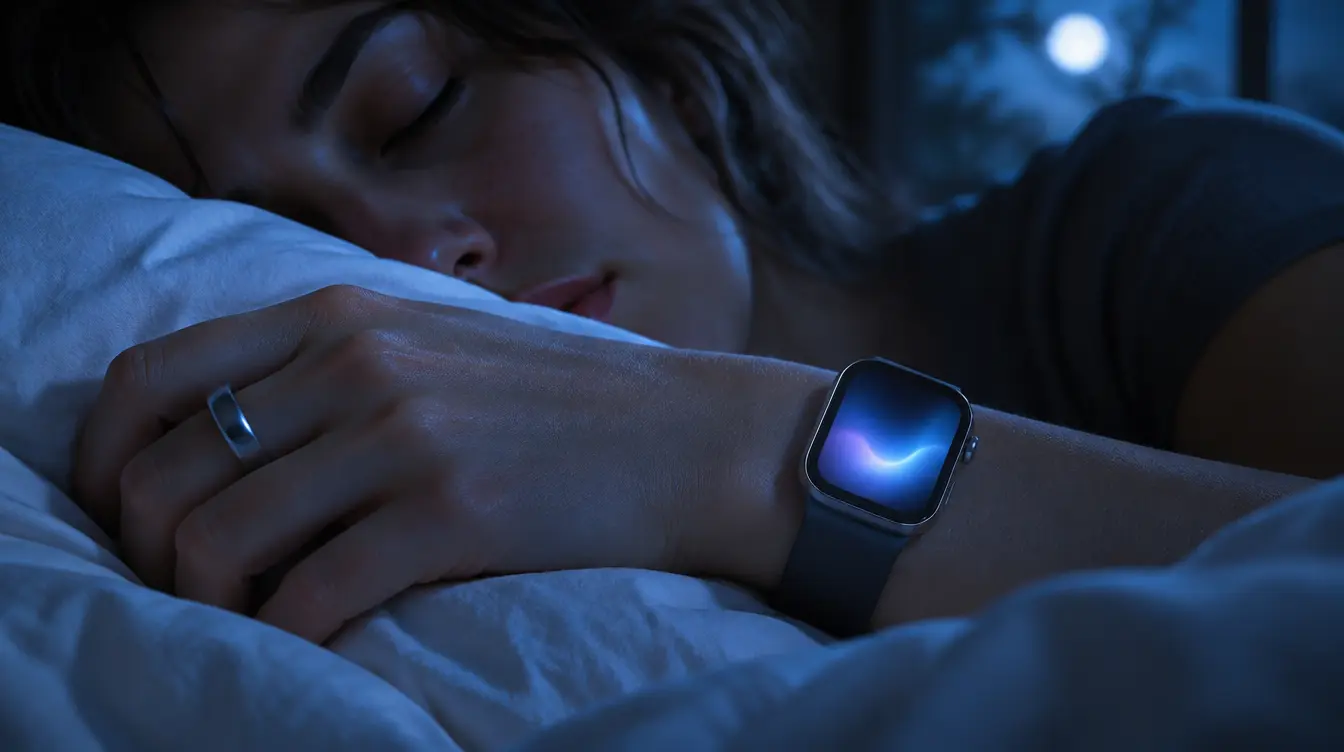
Smartwatches and fitness rings have made sleep trackers completely normal. Your watch tells you how long you slept, how much was "deep" and how "ready" you are for the day. Some people love it. Others find themselves lying awake worrying about their score.
Here's an honest look at the main options, what they can actually measure, and how to use them without letting them run your nights.
How Sleep Trackers Work
Most wearables don't measure sleep directly. They measure movement and heart rate, sometimes breathing and skin temperature, and then estimate when you were asleep and which stage you were in. The gold standard, a sleep lab test, measures your brain waves. Your watch can't do that.
In practice, good trackers are reasonably accurate at telling roughly how long you slept. They're much less reliable at splitting the night into light, deep and REM sleep. Treat stage breakdowns as rough guesses, not facts.
Watch vs Ring vs App
| Smartwatch | Smart ring | Phone app | Sleep diary | |
|---|---|---|---|---|
| Comfort in bed | Some people find it bulky | Usually very comfortable | Nothing to wear | Nothing to wear |
| What it measures | Movement, heart rate, often more | Movement, heart rate, temperature | Sound and movement from the bed | How you felt and what you did |
| Cost | Hundreds of dollars | Hundreds, sometimes plus a subscription | Free or cheap | Free |
| Good for | People who already wear one all day | People who hate watches in bed | Trying tracking cheaply | Spotting real patterns over weeks |
| Watch out for | Screen light and notifications at night | Subscriptions for full data | Phone in the bedroom | Being too strict with yourself |
When Tracking Helps
- Seeing your patterns: you sleep worse after late coffee, a drink, or a screen-heavy evening.
- Keeping your bedtime and wake-up time consistent.
- Giving you something concrete to show your GP if you've been sleeping badly for weeks.
When Tracking Backfires
Sleep researchers even have a name for it: orthosomnia, when chasing a perfect sleep score makes your sleep worse. You wake up feeling fine, check your watch, see a low score and suddenly feel tired. Or you lie in bed trying to "get more deep sleep", which is about the least sleepy thing you can do.
A few signs it's time for a break: you check the score before you check how you feel, a bad number ruins your morning, or you're adjusting your life around a percentage.
What to Do Instead (or As Well)
The best sleep tracker is still how you feel during the day. If you're mostly alert and in a decent mood, your sleep is probably fine, whatever the app says.
If you want to actually improve your sleep, put the energy into the evening, not the data. A calm wind-down, phone out of reach, and a short practice in bed like the 10-minute sleep meditation or Yoga Nidra will change more than any graph. If you wake at night, don't check your watch. Try these steps to get back to sleep instead.
Some watches also show a "stress" score based on heart-rate variability. It can be a nudge to slow down, but your body's own signals are a better guide. Our spiritual coaching site looks at this in wellness trends compared (spiritualcoachingguide.com).
Related Reading
- Magnesium vs meditation for sleep
- Sauna, massage or meditation before bed?
- Yoga vs Pilates for stress and anxiety (guidedanxietymeditation.com)
- Wellness trends compared, and where meditation fits (spiritualcoachingguide.com)
Want to build a calmer evening routine? Meditation for Beginners has free guides to get you started.
Trackers can't diagnose sleep problems. If you snore loudly, stop breathing or gasp during sleep, or feel exhausted most days, please talk to your GP.
Frequently Asked Questions
Which sleep tracker is most accurate?
No consumer device matches a sleep lab. Most decent watches and rings estimate total sleep reasonably well and sleep stages less well. Pick the one you'll actually find comfortable.
Is there a good free sleep tracker app?
Many phones have sleep features built in, and there are free apps that use your phone's microphone. A simple sleep diary is also free and often just as useful.
Should I wear my smartwatch to bed?
If it doesn't bother you, it's fine. Turn on night or do-not-disturb mode so notifications and light don't wake you.