You know the nights. You're tired, the house is quiet, and your mind decides now is the time to replay the whole day. A deep sleep meditation is simply something to do with that busy mind while you lie there. You slow your breathing, let your body get heavy, and give your thoughts one small, boring thing to follow, so sleep can sneak up on you.
Below are a couple of guided sessions you can press play on tonight, and a 15-minute version you can do on your own.
Guided Deep Sleep Meditations

Safe Space Visualization for Deep Sleep (8 minutes). You picture a place where you feel completely safe, and let your body settle into it. A good one for nights when you feel on edge.

Yoga Nidra for Deep Sleep (9 minutes). Your attention moves slowly around the body while you lie still. If you've got more time, there's a 26-minute Yoga Nidra for deep sleep too.
Some people can't stand a voice at bedtime. That's fine. Put on our deep sleep sounds with the timer, and they'll fade out on their own.
A 15-Minute Deep Sleep Meditation
Read this through once in the daytime. Tonight, just do what you remember. And if you're asleep before the end, good. That was the whole idea.
1. Settle (1 minute)
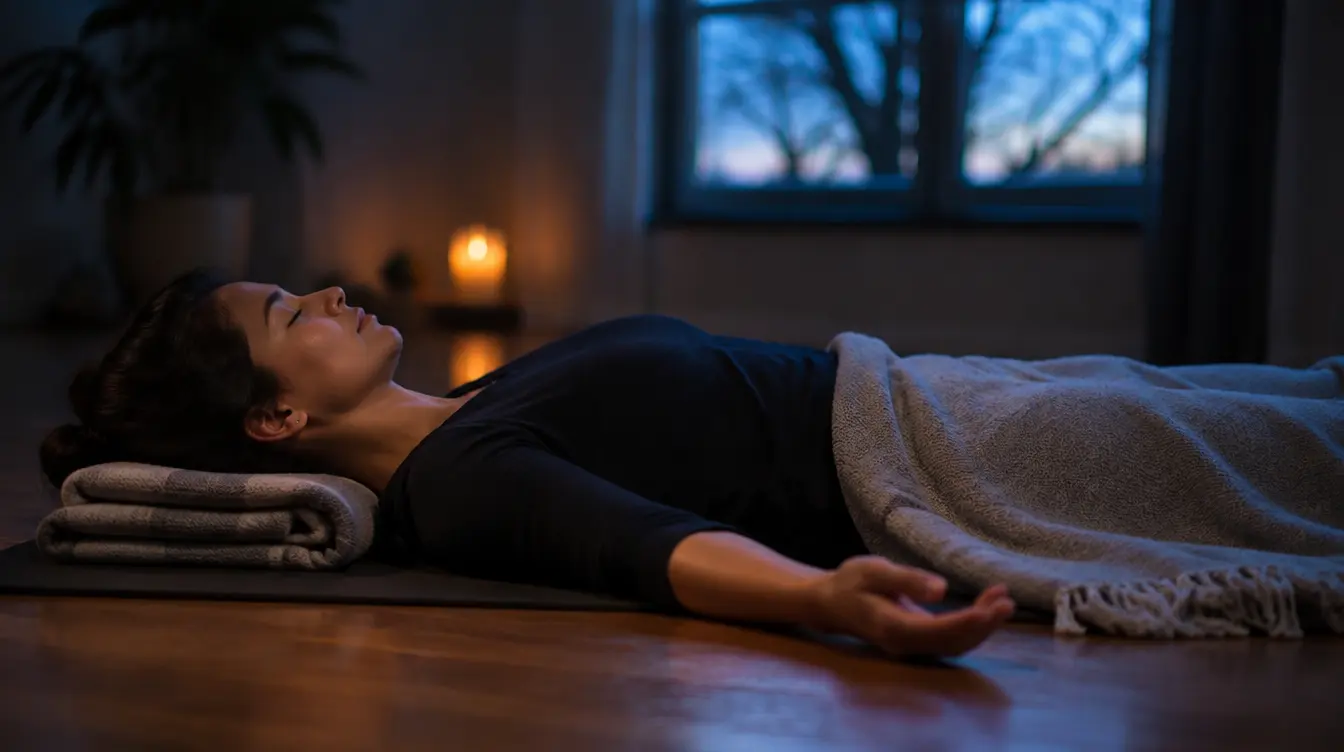
Get into the position you normally fall asleep in. Close your eyes and let out a long sigh through your mouth. Then another. Notice the bed is holding all of you. You don't have to hold anything up.
2. Lengthen the out-breath (3 minutes)
Breathe in through your nose for about four counts, and out for six, or eight if that's comfortable. Don't strain. A long, lazy out-breath is one of the quickest ways to tell your body it's safe to switch off.
3. Relax the body (6 minutes)
Start with your feet. Let them go heavy. Then your calves, your knees, your thighs. Keep moving up, slowly: hips, belly, chest, hands, arms, shoulders, neck. Finish with your face. Let your jaw hang a little loose and your forehead go smooth. If you find a tight spot, breathe out into it and let it sink.
4. Count down (4 minutes)
Count backwards from 50, one number each time you breathe out. Picture yourself going down a soft staircase, a step lower with every number. You'll lose count. Everyone does. Start again wherever you are, or don't bother. Losing count usually means it's working.
5. Let go (1 minute)
Drop the counting and drop the instructions. Let your breath do what it wants. Thoughts will still drift in. Let them drift out again. There's nothing left to do now.
Can Meditation Really Help You Sleep More Deeply?
Honest answer: it helps a lot of people, but it isn't magic. Studies of mindfulness and relaxation practices suggest they can make it easier to fall asleep and leave people feeling they slept better. No meditation can promise you a certain stage of sleep. What it can do is quieten the racing thoughts and the tension in your body, which are usually the things keeping you awake and sleeping lightly. Take those away, and deeper sleep has room to happen.
Tips for Deeper Sleep
The meditation works better when the rest of your evening is on its side. A few things that genuinely make a difference:
- Get up at the same time every day, weekends included. It's the single best anchor for your body clock.
- Dim the lights for the last hour, and leave your phone in another room if you can.
- Keep the bedroom cool, dark and quiet.
- Cut off coffee by midday. Go easy on wine at night too: it makes you drowsy, then tends to wake you at 2am.
- Do it every night, not just the bad ones. Relaxing into sleep is a skill, and it gets easier with practice.
Short on time? The 10-minute sleep meditation is a good fallback. Waking up in the night? Read how to get back to sleep.
One thing worth saying: if you snore loudly, wake up gasping, or feel wiped out even after a full night in bed, please see your GP. Those can point to a sleep condition that meditation on its own won't fix.
If meditation is new to you, Meditation for Beginners has simple, free guides that make practices like this one easier to follow.
Frequently Asked Questions
Is it OK to fall asleep during a deep sleep meditation?
Yes, please do. Daytime meditation is about staying awake and aware. This one isn't.
Is music or a guided voice better for deep sleep?
It depends on you. A voice gives a busy mind something to follow. Soft sounds suit people who find voices distracting. Try each for a week and see which nights go better.
How long should a deep sleep meditation be?
Anywhere from about 8 to 30 minutes. A short one you actually do every night beats a long one you never finish.