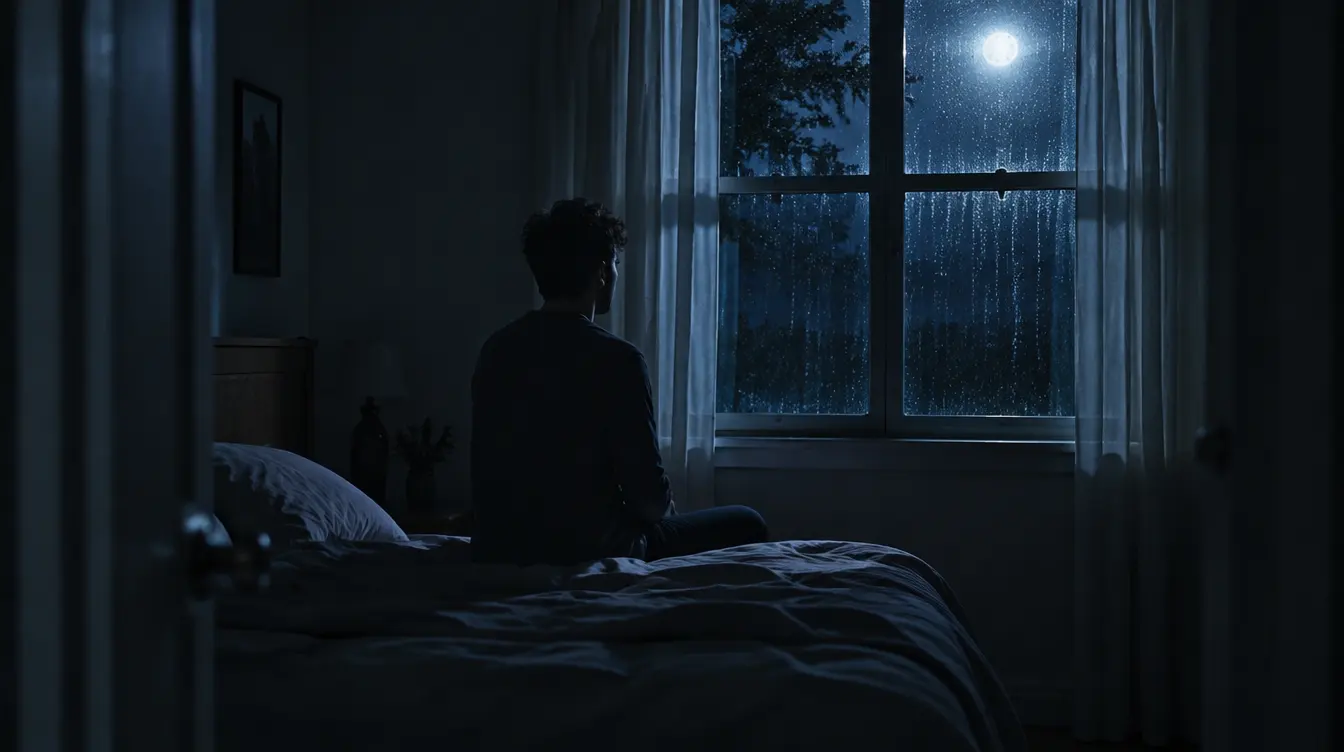
It's late, you're tired, and the second your head hits the pillow your mind starts up: tomorrow's meeting, that thing you said in 2014, whether you locked the back door. If that sounds familiar, you're far from alone. Guided sleep meditation is one of the simplest ways to quiet that noise. You lie in bed, press play, and a calm voice walks you through relaxing your body and slowing your mind until sleep takes over.
It suits complete beginners, people who lie awake with anxiety or overthinking, and anyone with on-and-off insomnia who'd like something gentler than another night of scrolling. In this guide you'll learn what guided sleep meditation is, why it works, the main techniques, how long a session should be, and how to get the most from it. If you'd rather just start, jump to the free sessions or try the body scan for sleep.
What Is Guided Sleep Meditation?
Guided sleep meditation is a meditation you listen to in bed, where a voice leads you step by step into relaxation so you can fall asleep more easily. Instead of trying to quiet your mind on your own, you simply follow instructions: breathe out slowly, soften your shoulders, notice your feet.
Guided vs unguided. In unguided meditation you set the pace yourself, which takes some practice. With a guided session, the voice does the remembering for you. That matters at bedtime, when you're tired and your attention is slippery. Following along takes almost no effort, and that's exactly the point.
How it differs from daytime meditation. Daytime meditation usually aims to keep you alert and aware. Sleep meditation does the opposite. It's slower, it's done lying down, and dozing off isn't a mistake. It's the goal.
How Guided Sleep Meditation Works
When you're stressed, your body stays in "alert" mode. Your heart rate stays up, your muscles stay a little tense, and your mind keeps scanning for problems. That's useful in the day and terrible at 11pm.
Slow breathing and steady, gentle attention switch on what researchers call the relaxation response, the opposite of the stress response. Your breathing and heart rate slow, muscles let go, and stress hormones can start to settle. Meanwhile the voice gives your mind one small, boring thing to follow, so there's less room left for worry. Put those together and the gap between lying down and falling asleep often gets shorter.
The research is encouraging. In one well-known trial published in 2015, older adults with sleep problems who learned mindfulness meditation slept better than those who only learned about sleep habits. Meditation isn't a magic switch, but it's a real, well-studied tool.
Most guided sleep meditations use one or more of these techniques:
- Body scan: moving attention slowly through the body, relaxing as you go.
- Breathing: counting or lengthening the out-breath.
- Progressive muscle relaxation: tensing and releasing muscle groups.
- Visualisation: imagining a calm, safe place or a slow story.
Benefits of Guided Sleep Meditation
- You fall asleep faster. A busy mind has something calm to follow instead of spinning.
- Fewer racing thoughts and less night-time anxiety. Slow breathing calms the body, and a calm body makes it harder to stay anxious.
- Better sleep quality. Going to bed relaxed rather than wired tends to mean less tossing and turning.
- Help with insomnia symptoms. It won't cure insomnia on its own, but it can make the hours in bed feel much less of a battle.
- A wind-down routine. Doing the same thing every night tells your brain that sleep is coming.
- Safe and not habit-forming. Unlike many sleep aids, there's no hangover, no tolerance and nothing to wean off.
Best Guided Sleep Meditation Techniques
There's no single best technique. The best one is the one that works for you. Here are the main options and who each tends to suit.
Body Scan Meditation for Sleep
You move your attention slowly from your toes to the top of your head (or the other way), noticing each part and letting it soften. Feet, ankles, calves, knees, and so on. Many people are asleep before they reach their shoulders.
It works so well at night because it pulls your attention out of your thoughts and into physical sensation, which is far less stimulating. Ten to twenty minutes is ideal. Our full body scan meditation for sleep walks you through it.
Progressive Muscle Relaxation (PMR)
You gently tense a muscle group for about five seconds, then release it and notice the difference. Feet, calves, thighs, hands, arms, shoulders, face. The contrast teaches your body what "relaxed" actually feels like.
PMR is great if you hold stress physically: a clenched jaw, tight shoulders, restless legs. Keep the tension gentle, never to the point of pain, and skip any area that's injured.
Breath-Focused Sleep Meditation
The simplest of all. Breathe in for a count of four and out for six or eight. A longer out-breath nudges your body towards rest. Or just count each out-breath from one to ten and start again whenever you lose count (you will).
This suits beginners and racing minds, because counting gives your thoughts a job. It's also a good fallback when you wake at 3am. More on that in how to get back to sleep.
Yoga Nidra for Sleep
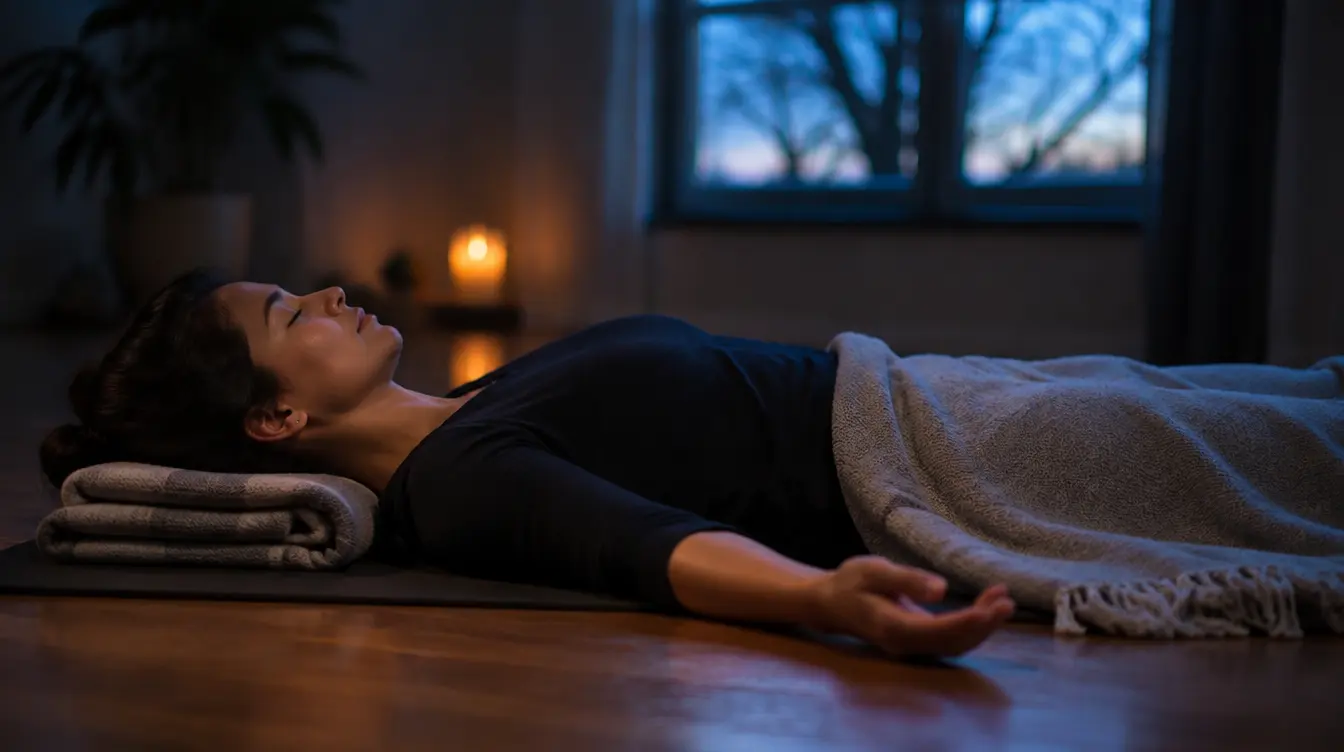
Yoga Nidra, sometimes called "yogic sleep", is a guided practice done lying completely still. A teacher leads you through an intention, a rotation of attention around the body, the breath, and sometimes imagery. There's no movement, so despite the name you don't need to know any yoga.
It's more structured than a simple body scan, and many people find it takes them into a deep, drifting state very quickly. That's why it's so popular for sleep. Read our guide to Yoga Nidra for sleep for more.
Visualisation and Sleep Stories
Here you picture a calm place, like a beach, a forest or a safe room, or follow a slow, gentle story. It works best for people with vivid imaginations and for anyone who finds pure body or breath focus a bit dull. Choose quiet, slow imagery. Anything with action or suspense will keep you up.
Which Technique Suits You?
| If you... | Try | Good length |
|---|---|---|
| Are brand new to meditation | Breath-focused meditation | 10 minutes |
| Hold tension in your body | Progressive muscle relaxation or a body scan | 10 to 20 minutes |
| Can't stop thinking | Body scan or Yoga Nidra | 15 to 20 minutes |
| Feel anxious at night | Slow breathing, then a safe-place visualisation | 10 to 15 minutes |
| Take ages to fall asleep | Yoga Nidra or a long body scan | 20 to 30 minutes |
| Love stories and imagery | Visualisation or a sleep story | 15 to 20 minutes |
How to Do Guided Sleep Meditation (Step-by-Step)
- Do it in bed. Brush your teeth, set your alarm and turn off the main lights first, so the meditation is the very last thing you do.
- Pick a length. Start with 10 to 20 minutes. (More on length below.)
- Set up your room and phone. Dim the lights, switch on Do Not Disturb, turn the volume low and put the phone face down. If you use a timer or sleep sounds, set them now.
- Get comfortable. Lie in whatever position you normally fall asleep in. You don't need a special pose.
- Press play and follow along. Let the voice do the work. When you notice your mind has wandered, and it will, gently come back to the next instruction. No need to scold yourself.
- Let go of the outcome. If you're still awake when it ends, that's fine. Keep lying still and breathing slowly. Resting quietly is still far better for you than lying there frustrated.
Guided Sleep Meditation for Specific Problems
Guided Sleep Meditation for Anxiety
When anxiety keeps you awake, your body is on high alert. Start with slow breathing and a long out-breath before anything else, then move to a gentle body scan or a "safe place" visualisation. Our sleep meditation for anxiety guide has a session made for exactly this.
For Racing Thoughts and Overthinking
Give your mind a job. Counting breaths or a detailed body scan works better than "clearing your mind", which almost never works. Some people also find it helps to write their worries on paper before bed, so the brain feels it can put them down. Try the Yoga Nidra for overthinking session below.
For Insomnia
If you often lie awake for a long time, try a longer session (20 to 30 minutes), and practise at the same time every night. Keep your expectations kind: the aim is rest, not forcing sleep. See how to fall asleep fast for more techniques.
If you've had trouble sleeping most nights for three months or more, please talk to your GP. Long-term insomnia is very treatable, and the first-line treatment, a short program called CBT for insomnia (CBT-I), works well. Meditation fits alongside it nicely. Also see your GP if you snore loudly, wake up gasping, or feel exhausted even after a full night in bed.
For Beginners
Start short. A 10-minute sleep meditation or a simple breathing practice is plenty. You don't need any experience, and you don't need to sit cross-legged. If you'd like to learn the basics of meditation in general, Meditation for Beginners has free step-by-step guides.
How Long Should a Guided Sleep Meditation Be?
- 10 minutes: a quick wind-down. Good for beginners and for nights when you're already tired.
- 15 to 20 minutes: the sweet spot for most people. Long enough to properly relax, short enough not to feel like a chore.
- 30 minutes or more: for people who take a long time to fall asleep, or who like to drift off with the voice still going.
If you're not sure, start with 15 minutes. If you're always asleep halfway through, try something shorter. If you're always awake at the end, try something longer, or follow it with sleep sounds on a timer.
What to Expect in Your First Week
Nights one and two can feel a little strange. You might notice how busy your mind is, or feel self-conscious listening to a voice in the dark. That's normal, and it isn't a sign it's not working.
By night three or four, most people find the routine itself starts to help. Pressing play becomes a signal: the day is done. You may notice you lose track of the instructions sooner, which usually means you're drifting.
By the end of the week, you'll have a feel for which technique and length suit you. Some people find they barely hear the first few minutes before they're asleep. Others still lie awake some nights but feel far calmer about it, and that shift alone often makes sleep come more easily over the following weeks.
Keep a simple note on your phone each morning: which session you used, and roughly how quickly you fell asleep. After a week or two, the pattern will tell you what works.
Free Guided Sleep Meditation Practices
These are free sessions from our YouTube channel, Soham Guided Meditation. Pick one by length and mood, put your phone down and press play.

Safe Space Visualisation for Deep Sleep (8 minutes). A short visualisation for nights when you feel on edge. You picture a place where you feel completely safe and let your body settle into it.

Floating Sleep Meditation (15 minutes). A gentle, drifting session where you imagine yourself floating like a feather. Lovely if you like imagery.

Yoga Nidra for Overthinking (18 minutes). A sky visualisation to help you release busy thoughts and let go. Made for racing minds.

Yoga Nidra for Deep Sleep and Anxiety Relief (26 minutes). A longer, slow session for nights when sleep takes its time.
Looking for more? There's also a 9-minute Yoga Nidra for deep sleep, a 9-minute sleep meditation for anxiety and a 17-minute restorative Yoga Nidra. Or skip the voice entirely and use our deep sleep sounds with a timer. For a quick, voice-free option, see the 15-minute deep sleep meditation you can do on your own.
Tips for Getting Better Results
- Consistency beats perfection. Ten minutes every night does more than an hour once a week.
- Keep the same time each night. Your body learns the routine and starts winding down on cue.
- Avoid bright screens beforehand. Choose your session, then turn the screen down and face down.
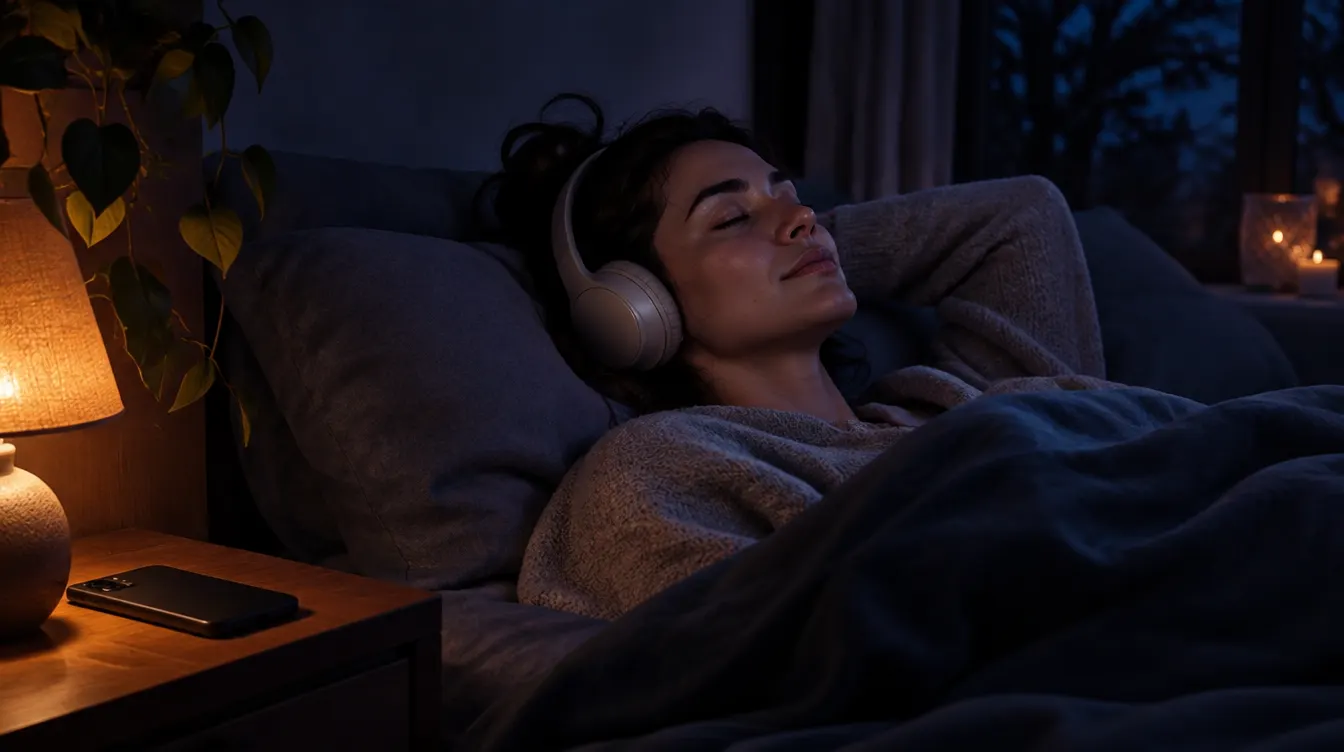
- Use soft headphones or a quiet speaker. Sleep headbands or soft earbuds are comfier than bulky headphones if you sleep on your side.
- Combine it with basic sleep habits. A cool, dark room, a regular wake-up time and less caffeine after midday all help the meditation work.
- When your mind wanders, that's normal. Noticing and coming back is the practice. Every return is a small win, not a failure.
Common Mistakes to Avoid
- Starting too long. A 45-minute session can feel like a chore on night one. Start with 10 to 15 minutes.
- Trying to force sleep. Sleep comes when you stop chasing it. Aim to rest, and let sleep be a bonus.
- Choosing stimulating content. Exciting stories, energising music or upbeat voices will wake you up.
- Practising inconsistently. Like any habit, it gets easier and works better with repetition.
- Picking content that's too complex. When you just want to sleep, choose something simple, not a long lecture or a deeply spiritual journey.
Frequently Asked Questions
Does guided sleep meditation actually work?
For many people, yes. Research suggests meditation can improve sleep quality and help you fall asleep faster by calming the stress response. It works best when practised regularly, and it isn't a replacement for medical treatment of a sleep disorder.
Can I do guided sleep meditation lying down?
Yes. It's designed to be done lying down in bed, in whatever position you normally sleep in.
What if I fall asleep halfway through?
That's the goal. Falling asleep during a sleep meditation means it's working. Set your app or video to stop on its own if you don't want it playing all night.
Is guided sleep meditation better than sleep stories?
Neither is better. Sleep stories are a type of guided sleep meditation that uses a gentle narrative. Body scans and breathing work well for busy minds; stories suit people who enjoy imagery. Try both and see which helps you drift off.
How often should I practise?
Every night if you can. Short and regular works far better than long and occasional, and the routine itself becomes a sleep cue.
Can guided sleep meditation help with anxiety-related insomnia?
It can help a lot with the anxious, racing mind that keeps you awake. If insomnia has lasted three months or more, talk to your GP too. CBT for insomnia is very effective, and meditation works well alongside it.
Do I need an app for guided sleep meditation?
No. The free sessions on this page and on YouTube are enough to get started. All you need is a phone or speaker, a quiet room and somewhere comfortable to lie down.
Start Tonight
Guided sleep meditation helps you fall asleep faster, quiets racing thoughts and builds a calm bedtime routine, all for free and without side effects. Don't try to do everything on this page. Pick one simple practice, like a 10 to 15 minute body scan, and do it every night this week. Then notice what changes.
When you're ready, choose a free session above, or explore Yoga Nidra and sleep meditation for anxiety.